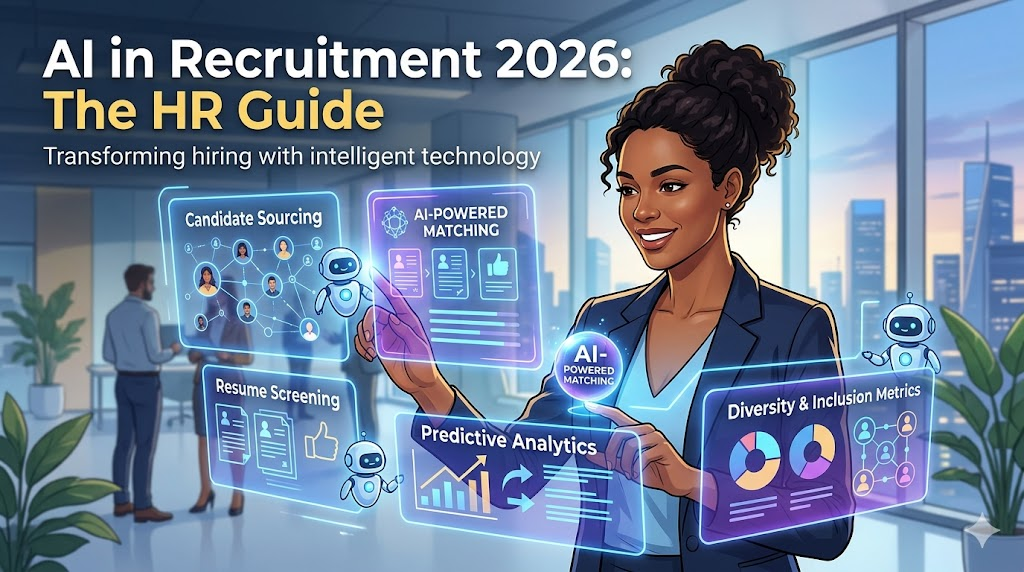
The recruitment landscape is evolving faster than ever. In 2026, Artificial Intelligence is no longer a futuristic concept in hiring. It has become a practical solution that helps HR teams recruit smarter, faster, and more efficiently.
From resume screening to candidate engagement, AI is reshaping every stage of the hiring process. Companies across industries are adopting AI powered recruitment tools to reduce hiring time, improve candidate quality, and enhance the overall recruitment experience.
In this guide, we will explore how AI is transforming recruitment in 2026, the benefits it offers HR teams, the challenges to consider, and how businesses can successfully integrate AI into their hiring strategy.
What is AI Recruitment?
AI recruitment refers to the use of Artificial Intelligence technologies such as machine learning, natural language processing, and predictive analytics to automate and optimize hiring processes.
AI helps HR professionals handle repetitive tasks, analyze candidate data, identify top talent, and improve recruitment decision making.
Instead of manually reviewing thousands of resumes, recruiters can now use AI tools to shortlist qualified candidates within minutes.
Why AI Recruitment is Growing Rapidly in 2026
The demand for faster and more accurate hiring is driving AI adoption in HR departments worldwide.
Several factors are contributing to this growth:
- Increasing competition for skilled talent
- Rising hiring volumes
- Remote and global recruitment needs
- Need for data driven hiring decisions
- Pressure to reduce recruitment costs
- Growing focus on candidate experience
Organizations are now looking for intelligent hiring systems that can streamline workflows without compromising hiring quality.
Key Ways AI is Transforming Recruitment in 2026
1. AI Powered Resume Screening
One of the biggest challenges for recruiters is reviewing large numbers of resumes.
AI recruitment software can scan resumes, identify relevant skills, analyze work experience, and rank candidates based on job requirements.
Benefits include:
- Faster candidate shortlisting
- Reduced manual workload
- Improved hiring efficiency
- Better matching of skills and job roles
Recruiters can focus more on strategic hiring decisions instead of repetitive administrative tasks.
2. Smarter Candidate Matching
Modern AI systems use predictive analytics to identify candidates who are most likely to succeed in a role.
These systems analyze:
- Skills
- Experience
- Certifications
- Behavioral patterns
- Past hiring data
- Job performance indicators
This improves the quality of hires and helps organizations reduce employee turnover.
3. AI Chatbots for Candidate Engagement
AI powered chatbots are becoming a major part of recruitment communication.
In 2026, many companies use chatbots to:
- Answer candidate queries instantly
- Schedule interviews
- Share job updates
- Conduct initial screening questions
- Improve communication speed
Candidates now expect faster responses, and AI helps HR teams deliver a better hiring experience around the clock.
4. Automated Interview Scheduling
Coordinating interviews manually can be time consuming.
AI scheduling tools automatically sync calendars, identify available time slots, and send interview invitations.
This reduces delays and speeds up the recruitment process significantly.
5. Predictive Hiring Analytics
AI recruitment platforms can now predict hiring outcomes using historical data and workforce trends.
Predictive analytics helps HR teams:
- Identify high potential candidates
- Forecast hiring needs
- Analyze recruitment performance
- Improve workforce planning
This data driven approach allows businesses to make smarter recruitment decisions.
AI Recruitment vs Traditional Recruitment
| Recruitment Process | Traditional Recruitment | AI Powered Recruitment |
|---|---|---|
| Resume Screening | Manual and time consuming | Automated and faster |
| Candidate Matching | Based on recruiter judgment | Data driven matching |
| Communication | Delayed responses | Instant chatbot support |
| Interview Scheduling | Manual coordination | Automated scheduling |
| Hiring Decisions | Limited data analysis | Predictive analytics insights |
| Recruitment Speed | Slower hiring cycles | Faster hiring process |
| Scalability | Difficult during high hiring volumes | Easily scalable |
6. Reducing Hiring Bias
Bias in recruitment remains a major challenge for many organizations.
AI tools are being designed to support fair hiring practices by focusing on skills, qualifications, and job related competencies rather than personal factors.
When properly implemented, AI can help create more inclusive hiring processes.
However, HR teams must regularly audit AI systems to ensure fairness and transparency.
Benefits of AI in Recruitment
Faster Hiring Process
AI significantly reduces time to hire by automating repetitive tasks such as resume screening and interview scheduling.
Improved Candidate Experience
Quick communication and personalized interactions create a better candidate journey.
Better Quality of Hire
AI driven insights help recruiters identify candidates who align more closely with job requirements and company culture.
Reduced Recruitment Costs
Automation lowers administrative workload and operational hiring expenses.
Enhanced HR Productivity
Recruiters can focus on relationship building, employer branding, and strategic workforce planning.
Challenges of AI Recruitment
While AI offers many advantages, there are also challenges HR teams should consider.
Data Privacy Concerns
Handling candidate data responsibly is essential. Organizations must comply with privacy regulations and maintain secure systems.
AI Bias Risks
Poorly trained AI models may unintentionally reflect existing hiring biases.
Regular monitoring and ethical AI practices are necessary.
Lack of Human Connection
Candidates still value human interaction during recruitment.
AI should support recruiters, not completely replace human communication.
Integration Challenges
Some organizations may face technical difficulties when integrating AI with existing HR systems.
Best Practices for Implementing AI in Recruitment
To successfully adopt AI recruitment solutions, HR teams should follow these best practices:
Define Recruitment Goals
Identify which hiring challenges AI should solve.
Choose the Right AI Tools
Select platforms that align with company hiring needs and business objectives.
Maintain Human Oversight
AI should assist recruiters rather than fully automate hiring decisions.
Monitor AI Performance
Regularly review AI outputs to ensure fairness, accuracy, and effectiveness.
Train HR Teams
Provide proper training so recruiters can effectively use AI technologies.
The Future of AI Recruitment
In the coming years, AI recruitment will become even more advanced.
Emerging trends include:
- AI generated job descriptions
- Voice based candidate assessments
- Predictive workforce intelligence
- Advanced skills mapping
- Personalized candidate experiences
- AI powered internal talent mobility
Companies that embrace AI driven recruitment strategies today will be better positioned to attract top talent in the future.
Frequently Asked Questions About AI Recruitment
What is AI recruitment?
AI recruitment is the use of Artificial Intelligence technologies to automate and improve hiring processes such as resume screening, candidate matching, interview scheduling, and recruitment analytics.
How does AI help HR teams in recruitment?
AI helps HR teams by reducing manual tasks, speeding up hiring, improving candidate matching, enhancing communication, and providing data driven hiring insights.
Is AI replacing human recruiters?
No, AI is not replacing recruiters. AI supports HR professionals by automating repetitive tasks, while recruiters continue to manage relationship building, interviews, and final hiring decisions.
What are the benefits of AI powered recruitment?
Some major benefits include:
- Faster hiring process
- Improved candidate experience
- Better quality hires
- Reduced recruitment costs
- Enhanced productivity for HR teams
- Smarter hiring decisions using analytics
Can AI reduce hiring bias?
AI can help reduce hiring bias by focusing on skills, qualifications, and job related data instead of personal factors. However, AI systems must be monitored regularly to ensure fairness and transparency.
What are the challenges of AI in recruitment?
Common challenges include:
- Data privacy concerns
- AI bias risks
- Integration with existing HR systems
- Lack of human interaction in some hiring stages
Which recruitment tasks can AI automate?
AI can automate several recruitment activities, including:
- Resume screening
- Candidate sourcing
- Interview scheduling
- Candidate communication
- Recruitment analytics
- Job matching
What industries are using AI recruitment tools in 2026?
Industries such as IT, healthcare, finance, retail, manufacturing, education, and customer service are actively using AI recruitment tools to improve hiring efficiency.
How does AI improve candidate experience?
AI improves candidate experience through faster communication, instant chatbot support, automated updates, and quicker hiring processes.
What is the future of AI in recruitment?
The future of AI recruitment includes predictive hiring analytics, AI generated job descriptions, advanced workforce planning, personalized candidate engagement, and intelligent talent management systems.
Final Thoughts
AI is transforming recruitment in 2026 by making hiring faster, smarter, and more efficient. HR teams are now using AI powered tools to automate repetitive tasks, improve candidate matching, enhance communication, and make data driven hiring decisions.
While AI cannot replace the human side of recruitment, it can significantly improve how organizations attract and hire talent.
Businesses that combine AI technology with human expertise will create stronger recruitment strategies and gain a competitive advantage in the evolving job market.
As AI continues to reshape HR operations, now is the perfect time for organizations to explore how intelligent recruitment solutions can support long term hiring success.